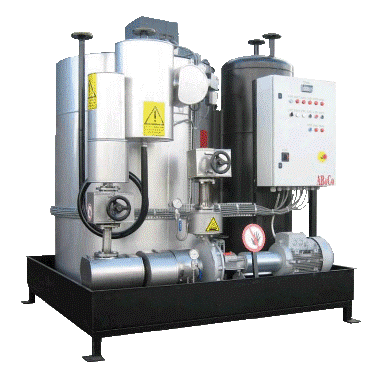
A thermal oil boiler fires through a helical coil and generates energy from the hot products of combustion.
Thermal fluid heater working principle.
The outlet temperature of the thermal oil directed to the orc can rise up to 320 c due to the use of high quality synthetic oil.
In this equipment a thermic fluid is circulated in the entire system for heat transfers to the desired processes.
Thermal oil heaters operate on the same principle as their steam based counterparts.
Combustion process heats up the thermic fluid and this fluid carries and rejects this heat to the desired fluid for concluding the processes.
Fulton thermal fluid systems can reach 750 f 345 c making them an ideal choice for many process heat applications.
The thermal oil boiler figs.
Now these days thermic oil glycol or water are common heat mediums which are used by being heated and circulated to heat energy in industrial purpose within a closed loop system.
Thermal mass flow sensors are most often used for the regulation of low gas flows.
A thermic fluid heater is industrial heating equipment used where only heat transfers are desired instead of pressure.
A thermal fluid heater uses a liquid phase heat transfer medium to put heat energy into a process.
Thermosiphon or thermosyphon is a method of passive heat exchange based on natural convection which circulates a fluid without the necessity of a mechanical pump.
A thermal fluid hot oil system operates in a closed loop circulation system with minimal pressure.
This by heating the coil through radiation and convection.
They operate either by introducing a known amount of heat into the flowing stream and measuring an associated temperature change or by maintaining a probe at a constant temperature and measuring the energy required to do so.
The thermal oil heats coils in various types of heat users.
The choice between a steam system or a thermal fluid system is governed by the process requirements.
Thermosiphoning is used for circulation of liquids and volatile gases in heating and cooling applications such as heat pumps water heaters boilers and furnaces.
Features of thermic fluid heater.
The thermal stability of the fluid is the primary factor for determining its maximum operating temperature.
15 12 and 15 13 transfers the heat content in the combustion gas to the thermal oil.
The coil heats the thermal oil or fluid that is pumped through the thermal oil boiler.
Components of sufficient strength are then chosen and the heater is constructed.