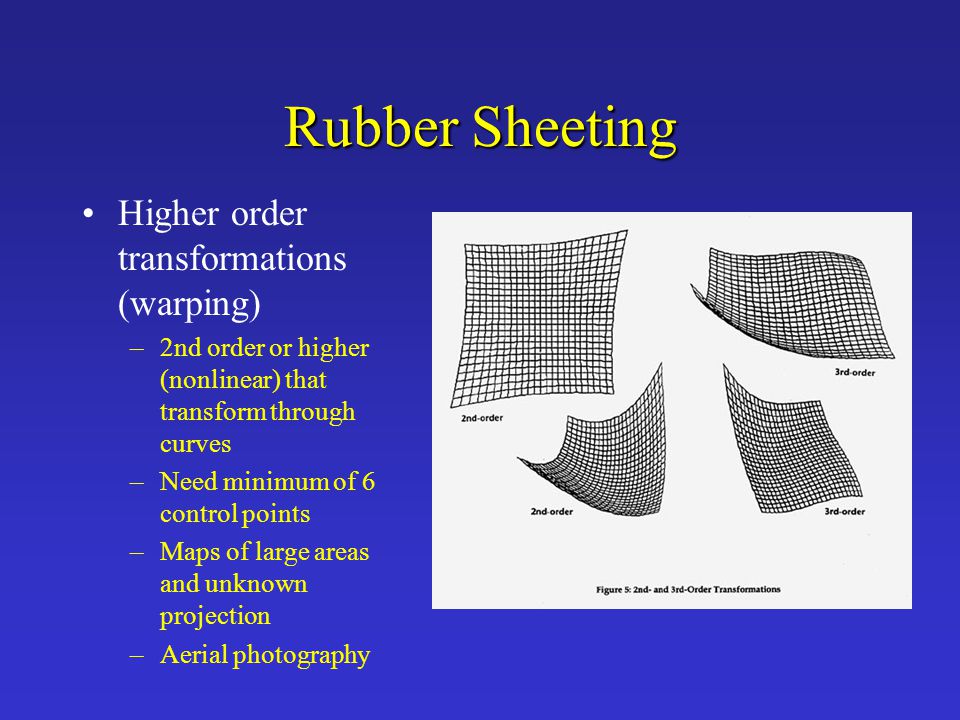
Rubber sheeting topological process of stretching or shrinking a subarea or portion of a map or image to fit in registration with selected control points.
Rubber sheet transformation in gis.
Click the spatial adjustment menu and click options.
Geometric distortions commonly occur in source maps.
On the edit tab in the features group click modify.
They may be introduced by imperfect registration in map compilation lack of geodetic control in source data or a variety of other causes.
Rubber sheeting may improve the value of such sources and make them easier to compare to modern maps.
The affine transformation function is.
Root mean square error measure of registration accuracy used during digitizing and coverage transformations.
Affine similarity and projective.
Rubber sheeting is a useful technique in historical gis where it is used to digitize and add old maps as feature layers in a modern gis.
Click rubbersheet for the adjustment method so you can set additional options for rubbersheeting.
Click the adjustment methods drop down arrow and click rubbersheet.
The graphic below illustrates the four possible changes.
Qgis is a free open source gis package.
Click the options button.
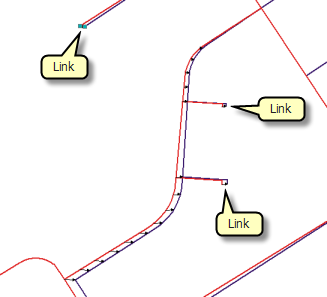
You can press and hold the spacebar to temporarily turn off snapping as you create anchor points and draw displacement links or rubber sheet area polygons.
This drawback brings us to the idea of incorporating the historical maps into gis after rubber sheet transformation i e.
Click the spatial adjustment menu point to adjustment methods then click a transformation method.
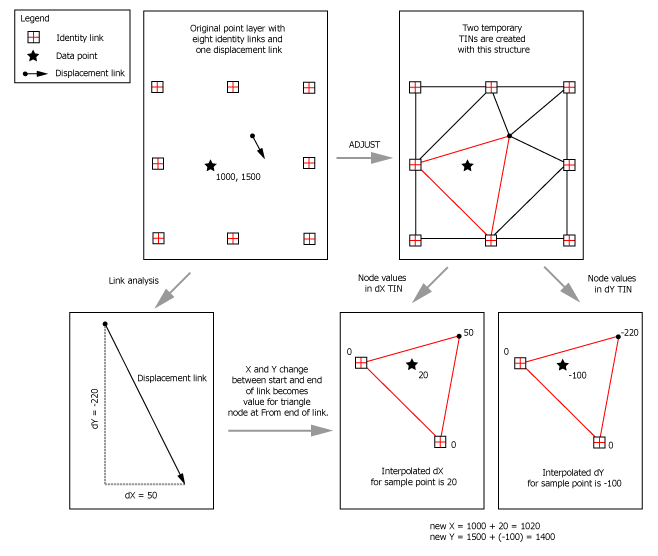
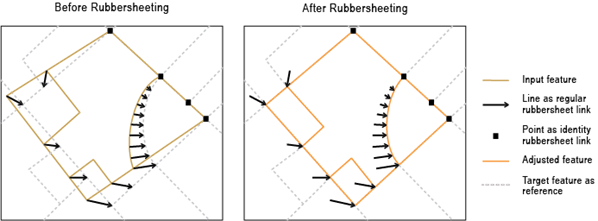
The input point features represent identity links that hold source positions unmoved during the rubbersheeting process.
It makes possible comparing and overlaying multiple maps from different time periods.
Click the spatial adjustment menu point to adjustment methods then click rubbersheet to set the adjustment method.
Click the general tab.
Click the spatial adjustment menu and click options.
Rubbersheeting is used to make small geometric adjustments in your data usually to align features with more accurate information.
The input link features represent the regular links.
X ax by c y dx ey f.
Before aerial photography arrived most maps were highly inaccurate by modern standards.
Cadcorp spatial information system software sis map modeller is offering a tool for rubbersheeting data layers.
Qgis georeferencer plug in provides a number of transformation types including thin plate spline which enables full rubber sheeting.
An affine transformation can differentially scale the data skew it rotate it and translate it.
The modify features pane appears.
Geometric correction of them.
Click either the natural neighbor or linear method and click ok.
Expand alignment and click transform.